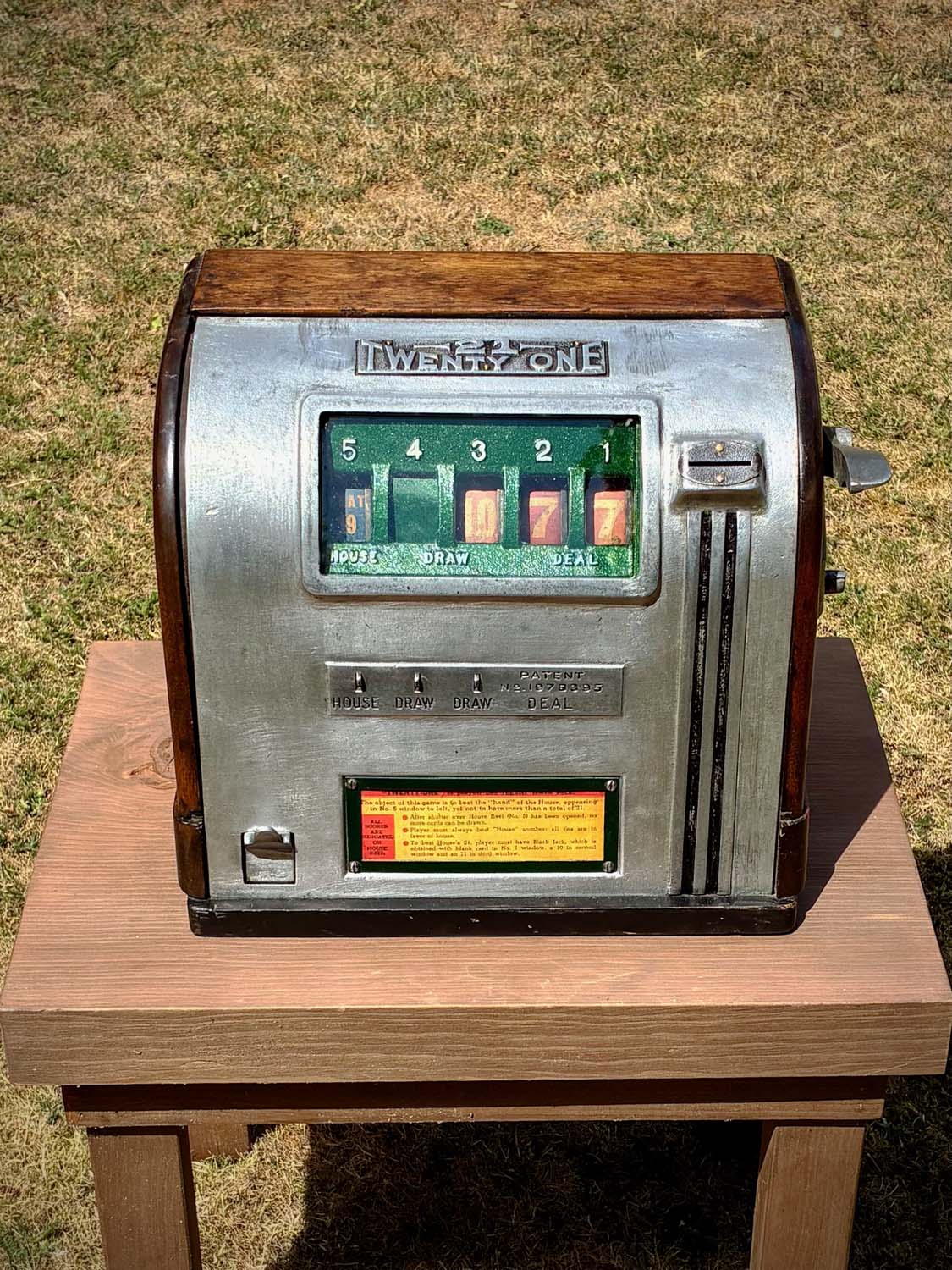
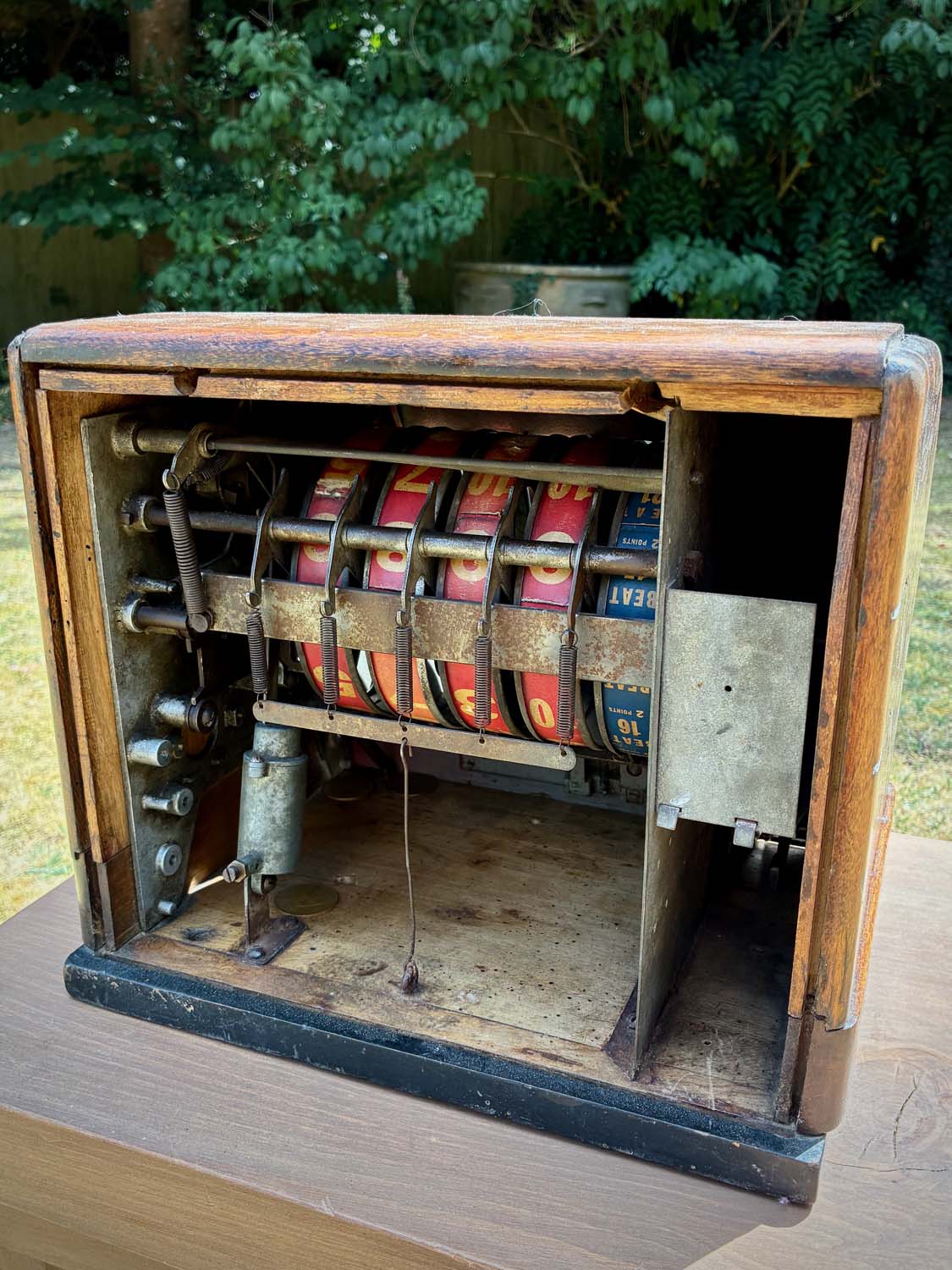
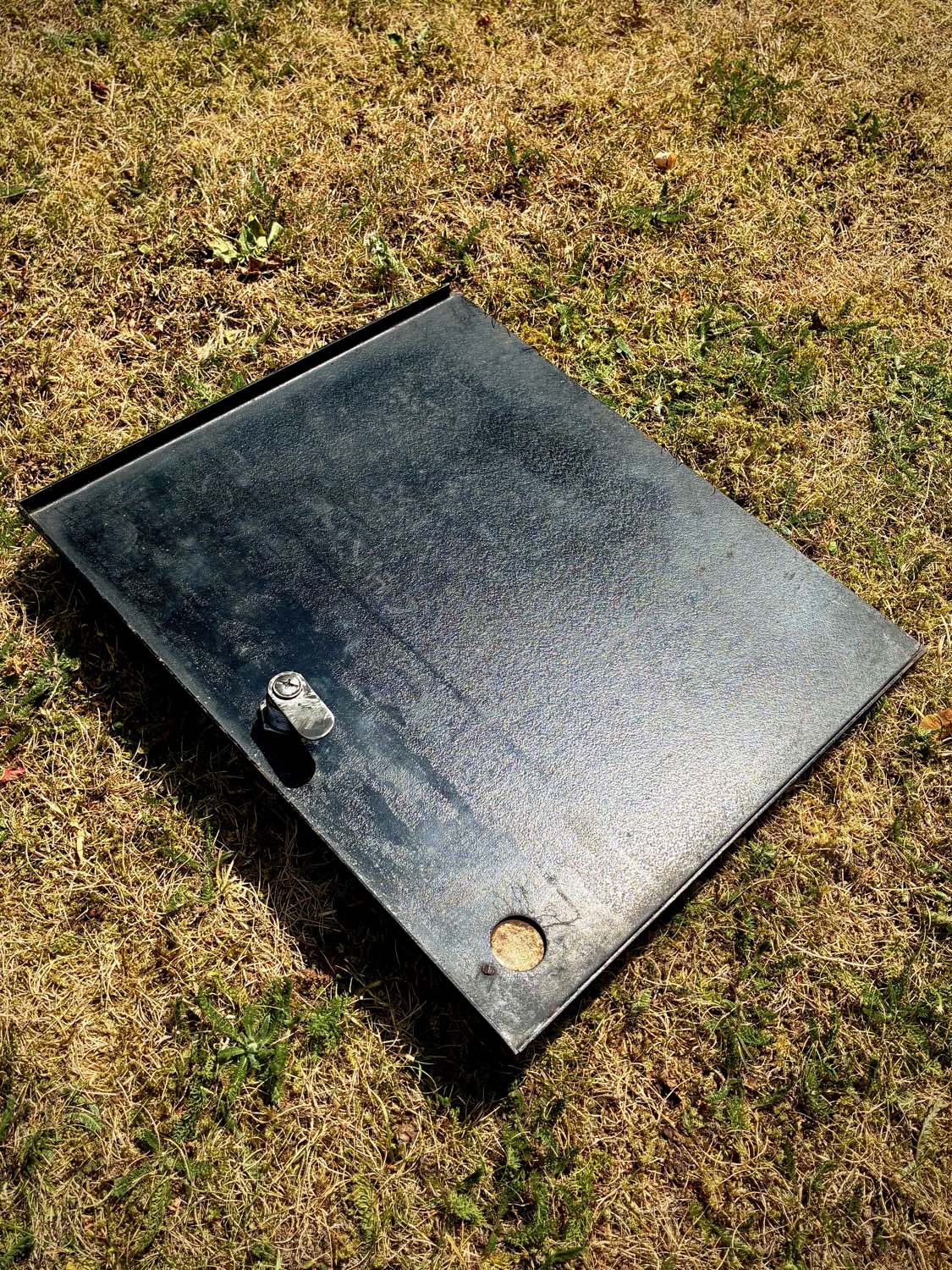
1930’s “Twenty One” Mechanical Trade Stimulator
#0033
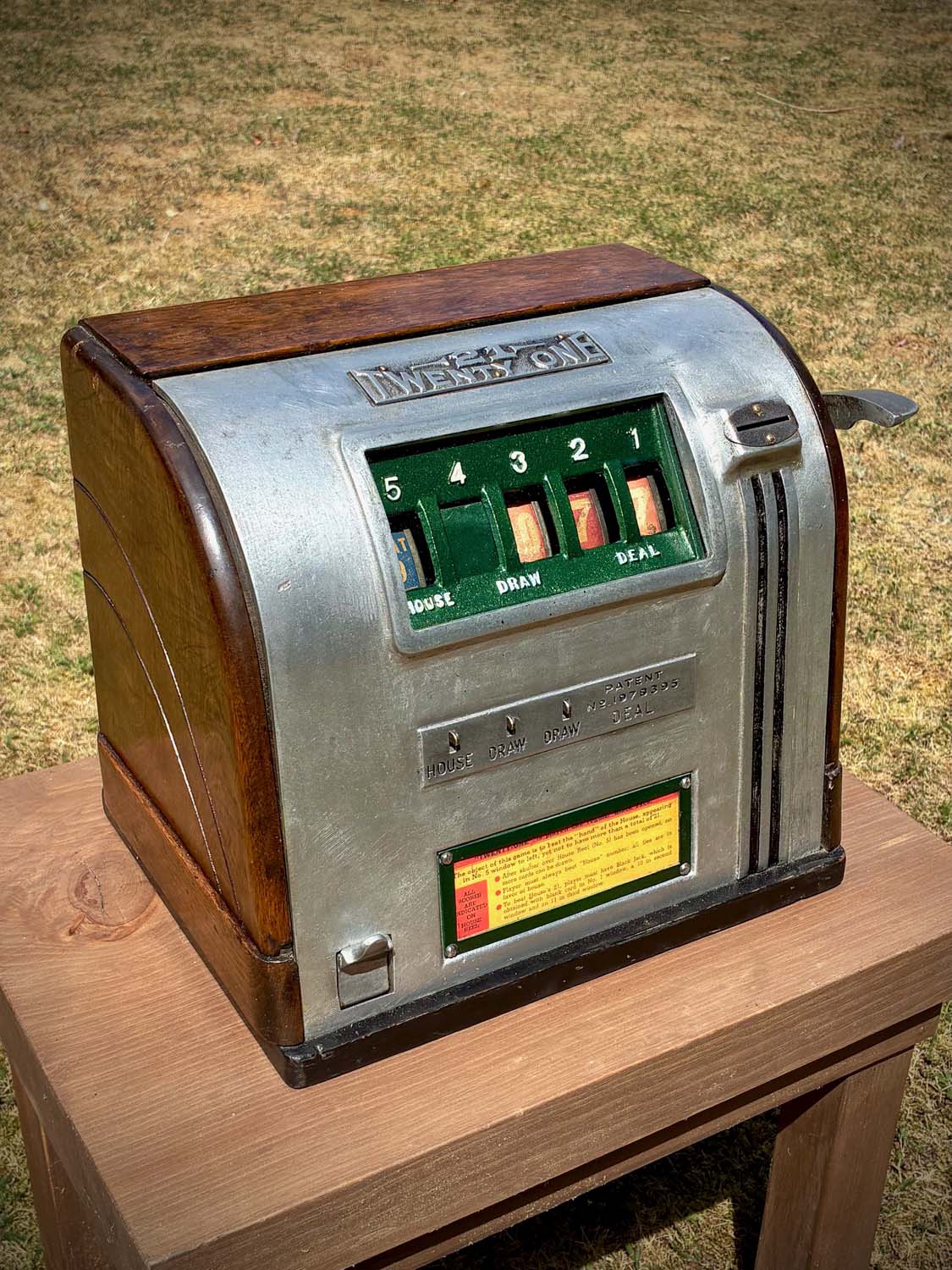
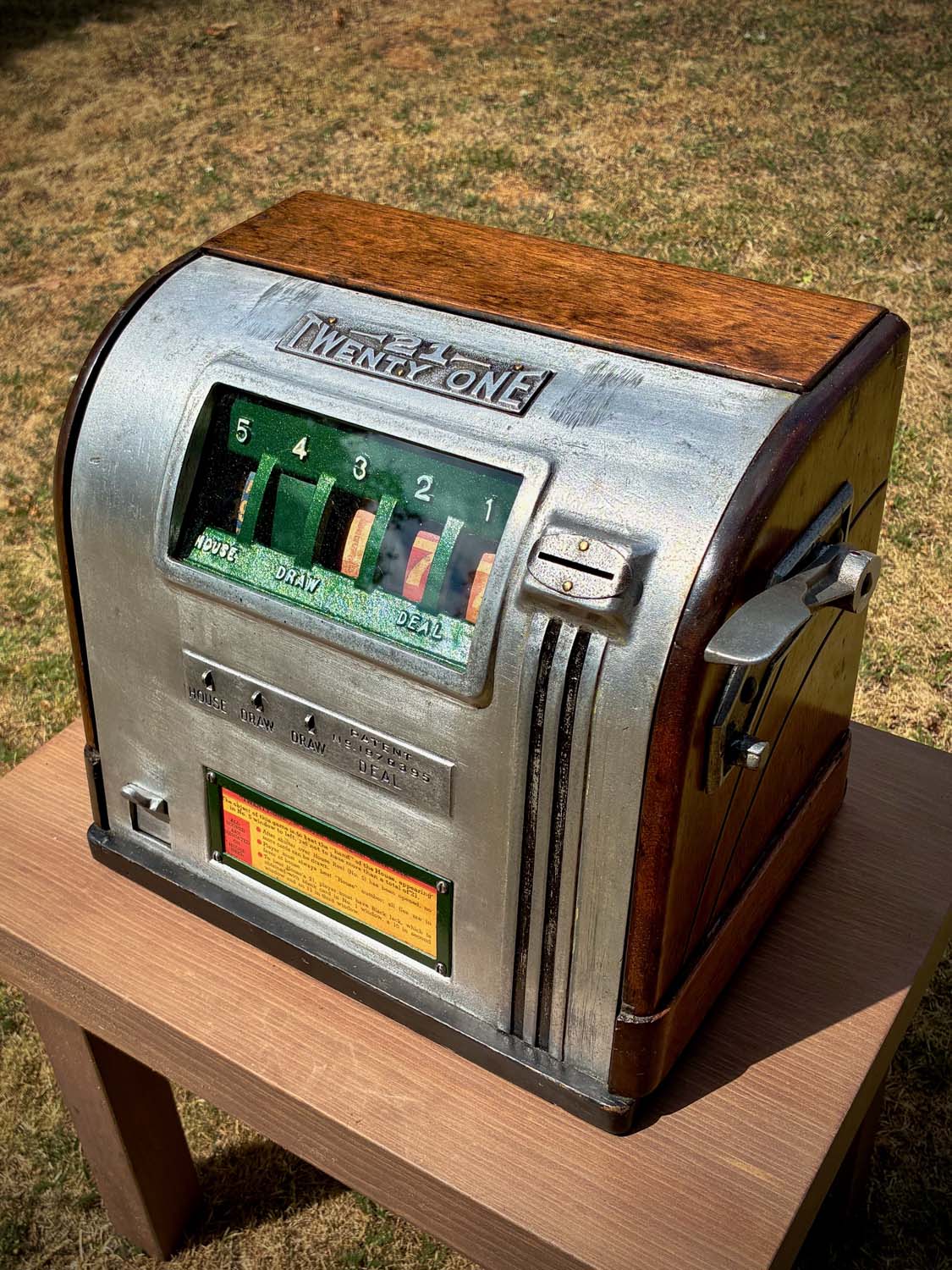
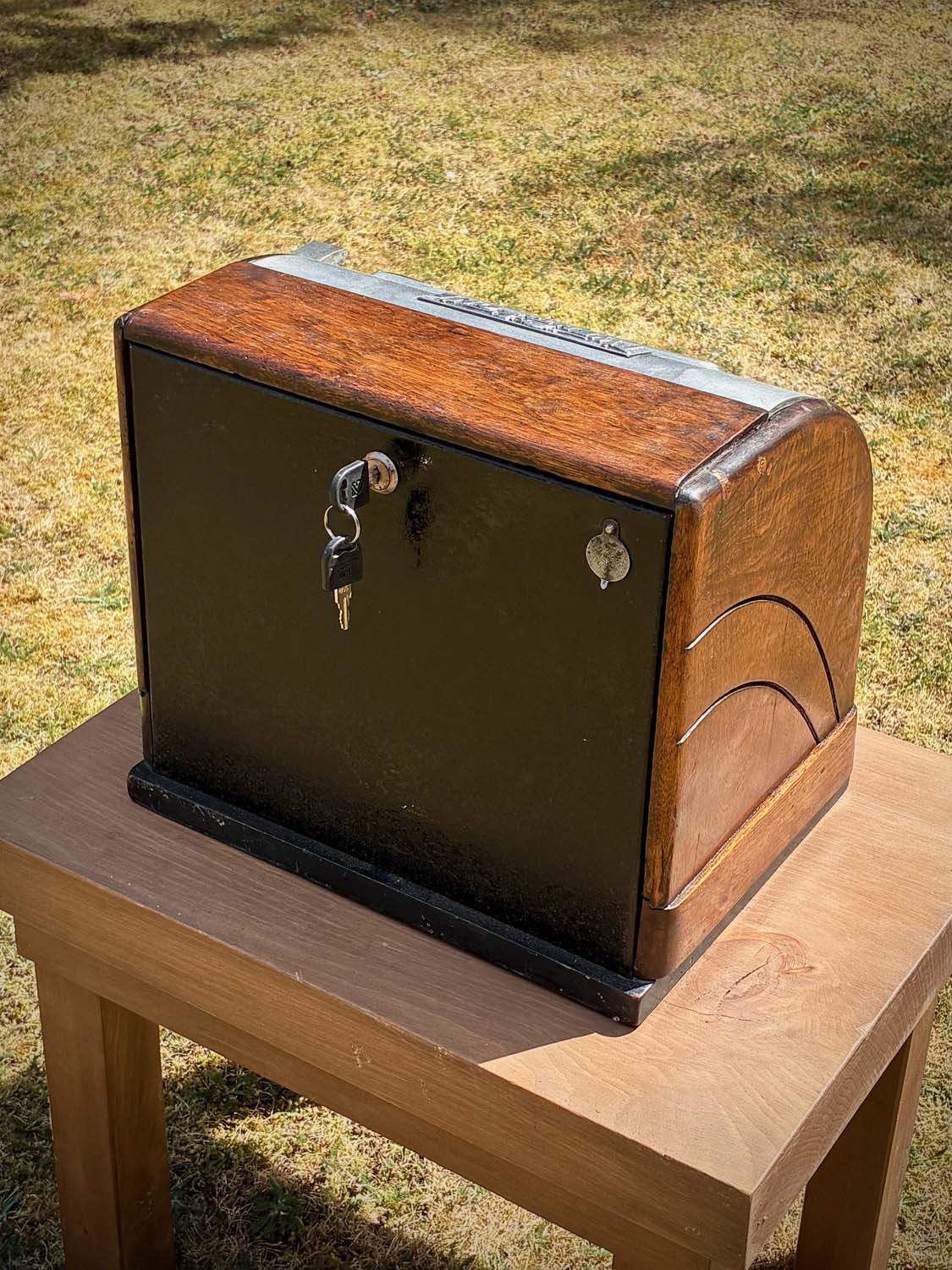
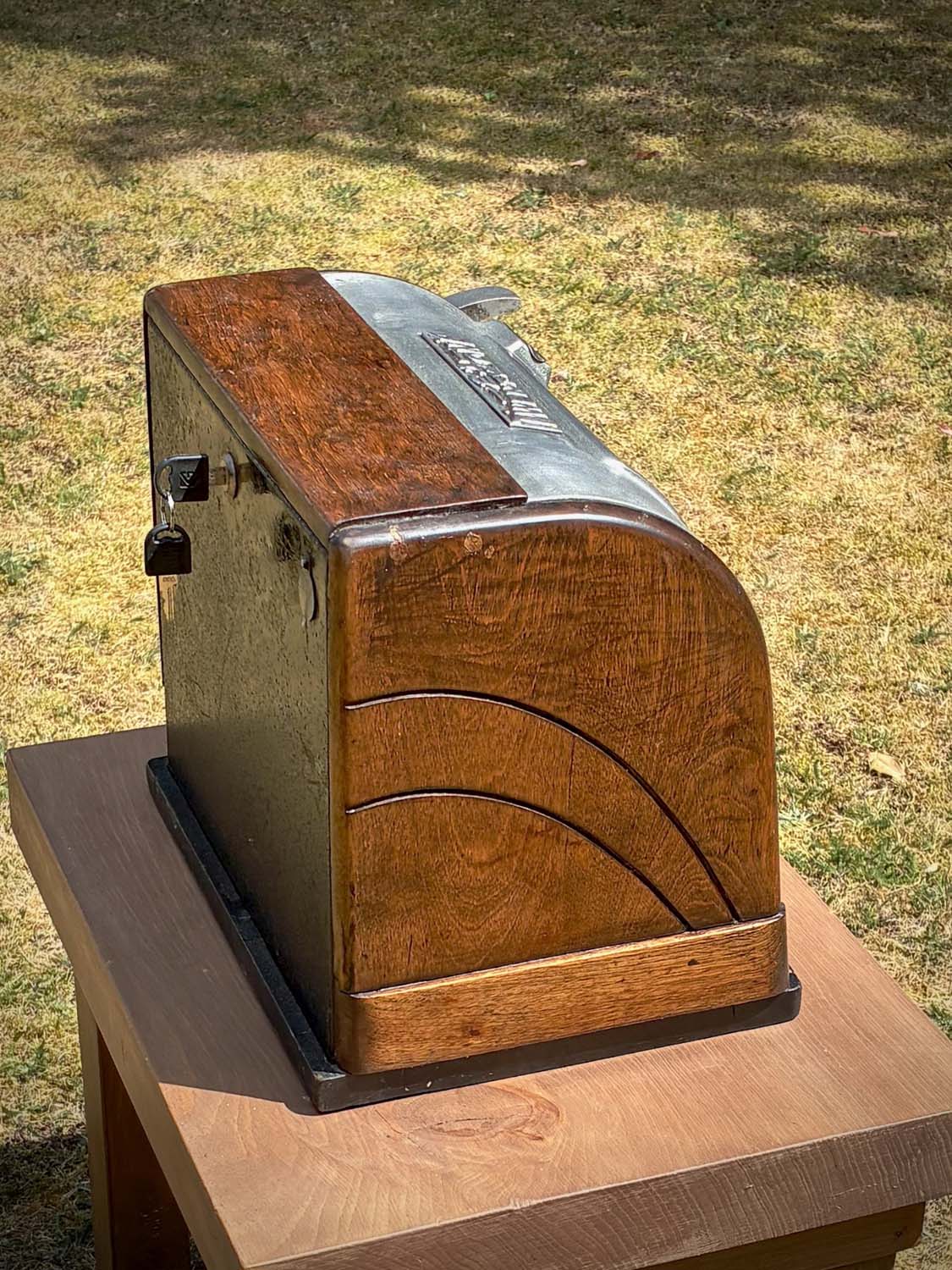
This is a fully, yet sympathetically restored "Twenty One" mechanical trade stimulator, an antique tabletop gambling machine manufactured in the mid-1930s (circa 1934–1936) by the Groetchen Tool & Manufacturing Company of Chicago.
History and Purpose
During the Great Depression, direct payout gambling slot machines were heavily restricted or outlawed in many states. To circumvent these strict gambling laws, companies designed "trade stimulators".
These machines were placed on the counters of taverns, cigar shops, and bars to "stimulate" business. To legally operate as a vending machine rather than an illegal gambling device, it legally rewarded the player with a single piece of ball gum for every coin inserted. However, if the player beat the machine's hand, the bartender would secretly pay out real rewards over the counter, such as free drinks, cigarettes, or cash.
How the Game Works
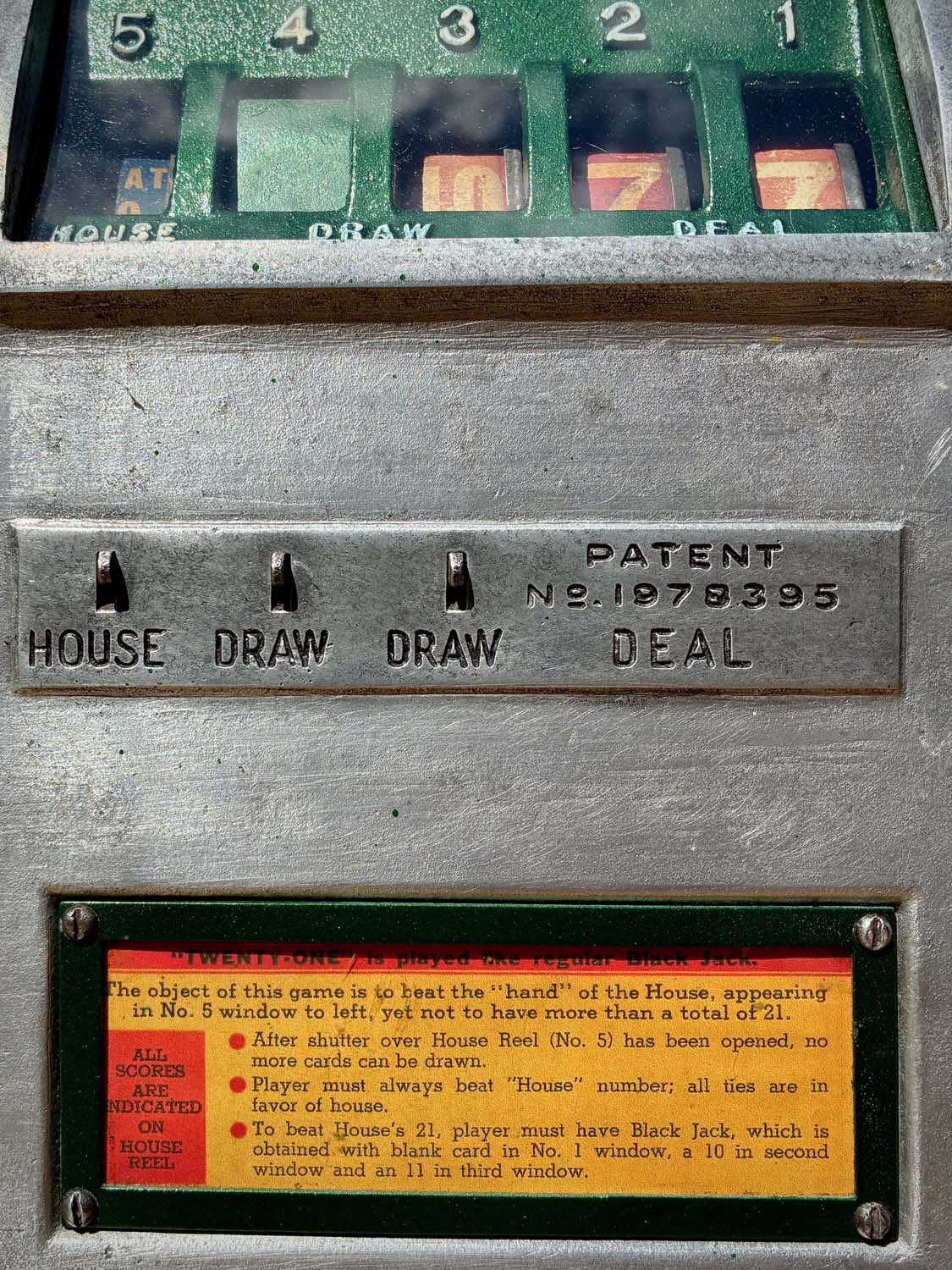
- The machine plays a mechanical, clever version of Blackjack (Twenty-One):
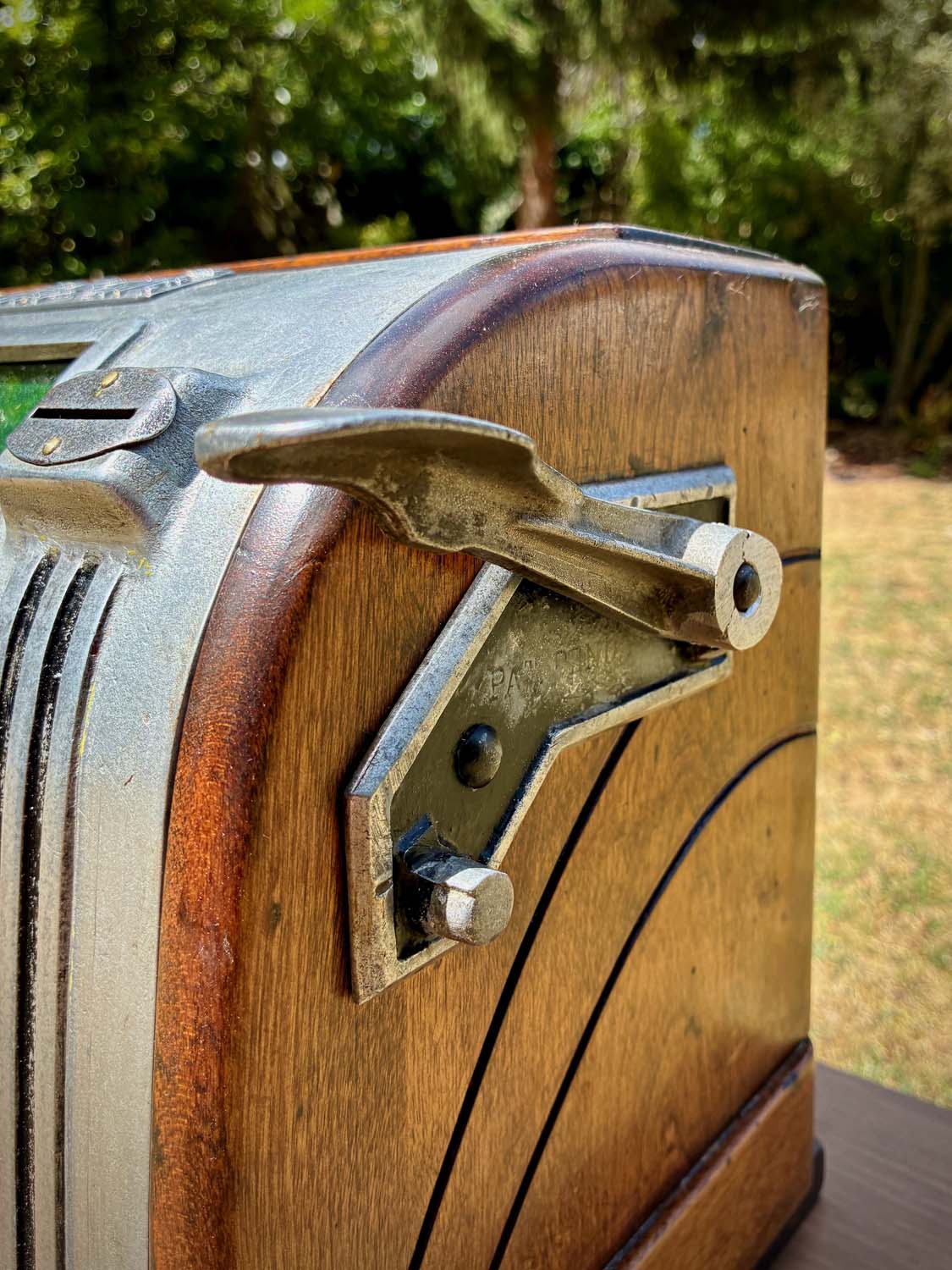
- The Deal: A player inserts a coin (often a penny or nickel) and pulls the side lever down. This spins all five inner reels.
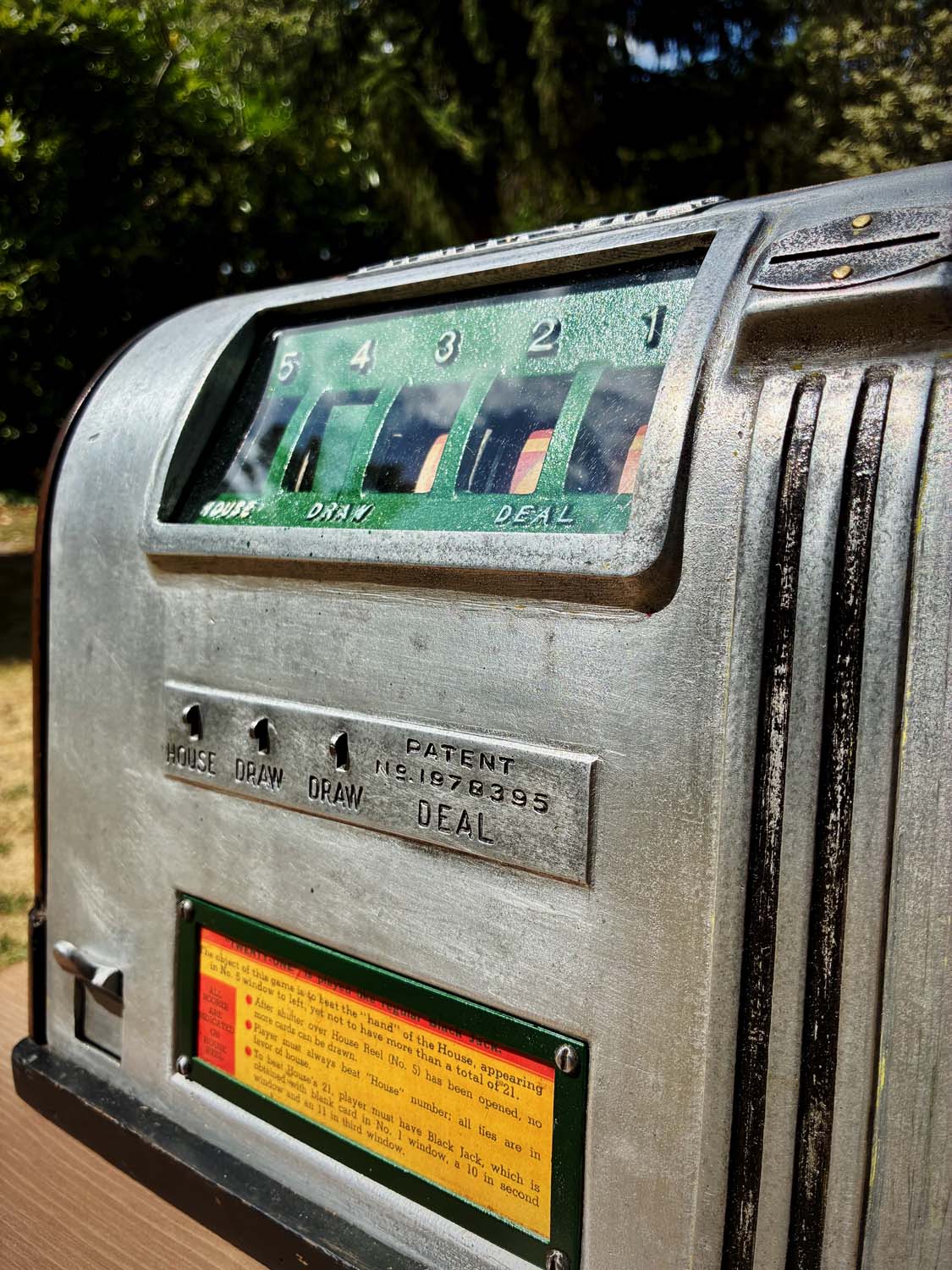
- The Shuttered Windows: When the reels stop, the first three windows (labeled 5, 4, 3) are completely blocked by internal metal shutters. The player can only see their initial two-card hand in windows 2 and 1 (labeled DEAL).
- The Hit / Draw: If the player wants to take a "hit" to add to their point total, they press the physical button directly below window 3 to drop its shutter and reveal a third number. If they want another card, they press the button under window 4.
- The Dealer's Hand: Once satisfied with their score (trying to get as close to 21 as possible without going over), the player flips the lever under window 5 (labeled HOUSE). This reveals the dealer's final score to see who won the round.
Dimensions